
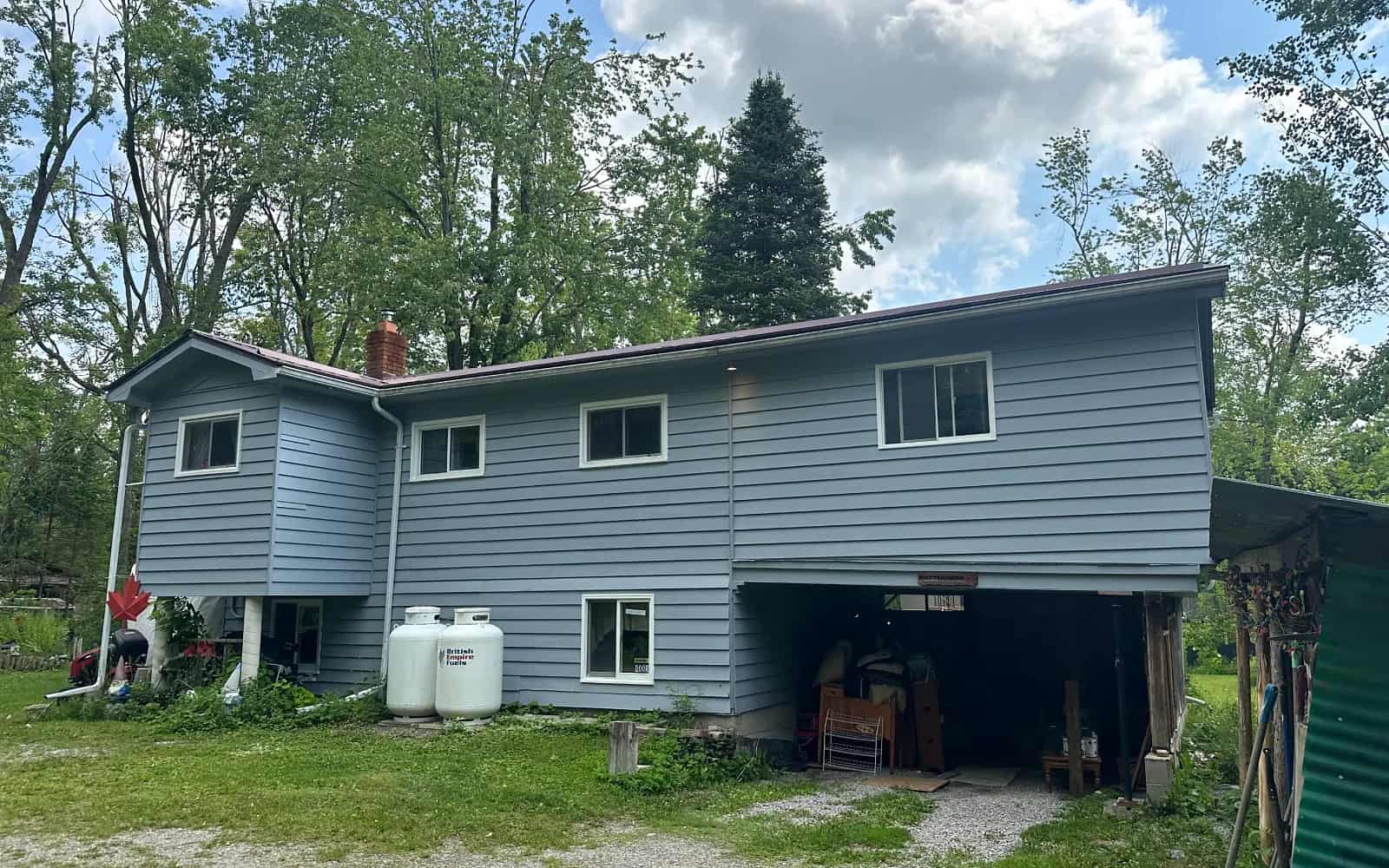
Selling a vacant or empty house in Ontario?
We buy vacant and unoccupied properties across Ontario, houses, condos, cottages, land, and rentals, as-is for cash, so you can end the carrying costs and close fast.

- 1Submit or Call
- 2Get a Cash Offer
- 3Close & Get Paid
Step 1
Submit Our Lead Form or Call / Text Us
Step 2
Get a Cash Offer

Step 3
Close and Get Paid

The Short Answer
To sell a vacant Ontario house quickly, sell it as-is to a direct buyer before more months of property tax, heating and insurance pile up. Many home policies restrict coverage once a house sits empty. We buy empty houses, cottages and land, leftover contents and all, and a 7-day closing is possible. Expect a lower price.
Sell a Vacant House in Ontario: As-Is, for Cash
An empty house doesn't wait for you to be ready. Every month it sits, it pulls in property taxes, utilities, and insurance while bringing in nothing. If you own a vacant or unoccupied property in Ontario, a house, condo, cottage, rental, or land, we buy it as-is for cash, so you can stop paying to hold a place nobody is living in.
There's no clearing it out, no repairs, and no listing it for months. We look at the property once and usually have a fair all-cash offer to you within 24 hours, and the closing date is yours: in as little as 7 days (most of our sales run 7 to 15), or later if you'd rather line the sale up with an estate, a move, or your return from down south.
The Real Cost of Holding an Empty House
A vacant home is one of the few things you can own that only costs money. The mortgage still comes due. The property tax bill still arrives. You keep the heat on through the winter so the pipes don't freeze, keep a policy active, and pay someone to cut the grass or clear the snow so the place doesn't look abandoned. None of it is offset by rent or use.
Those carrying costs pile up quietly, month after month, and they're the reason most owners of empty Ontario properties end up wanting a fast, clean sale rather than a drawn-out one.
What a Vacant Property Keeps Costing You Every Month
- Mortgage payments and interest, with no rental income coming in to cover them
- Property taxes, plus a municipal vacant home tax in some cities (more on that below)
- Heat and hydro kept running so the pipes and the building don't suffer over an Ontario winter
- Insurance, which often costs more, or lapses entirely, once a home sits empty
- Lawn care, snow removal, and general upkeep so the property doesn't look unoccupied
- Someone checking on the place for leaks, break-ins, or storm damage
What happens to your home insurance when a house sits empty?
Here's the part that catches a lot of owners off guard: a standard home insurance policy usually isn't built for an empty house. Many policies include a vacancy clause that limits or removes coverage once a property has been unoccupied for a set period, often around 30 days. If a pipe bursts or a fire starts after that window, a claim can be reduced or denied.
If your Ontario property is sitting empty, you generally need to tell your insurer and either get a vacancy permit or switch to a vacant home policy, which tends to cost more and carry conditions such as regular inspections and heat kept on or water drained. Check your own policy wording with your broker, because the timelines and rules vary from one company to the next. Selling ends the question altogether; the coverage becomes our concern at closing.
Do you have to pay a vacant home tax in Ontario?
In some cities, yes. Toronto has a Vacant Home Tax, Ottawa has a Vacant Unit Tax, and Hamilton brought in its own Vacant Unit Tax, which council there has voted on year by year. Each is an annual charge on top of regular property tax for homes left empty for much of the year, and the rates, rules, and deadlines differ from one city to the next.
The common trap is the declaration. These programs generally require every residential owner to declare whether the home was occupied, and a property can be deemed vacant and taxed simply because nobody filed. Most list exemptions, such as the owner's death, a stay in hospital or long-term care, major renovations under a permit, or a change in ownership during the year. Check with your municipality and keep the paperwork; a sale takes the property out of your name, and the next year's bill with it.
How do you winterize a vacant house in Ontario?
An empty house in an Ontario winter needs one of two approaches: keep it heated and checked, or shut the water off and drain the system completely. Half measures are where frozen pipes come from. Your insurer may dictate which approach it accepts, so ask before you choose.
- Shut off the main water valve and drain the lines, opening every tap and flushing the toilets
- Turn off and drain the water heater, after shutting off its gas or power
- Pour plumbing antifreeze into sink and tub traps, toilet bowls, and floor drains
- Disconnect hoses and shut off the outside taps
- If you keep the heat on instead, set a minimum temperature and arrange regular checks
- Test the sump pump, clean the eavestroughs, and book snow clearing
- In rural homes, ask a licensed plumber about the well pump, pressure tank, and septic system
What tends to go wrong in an empty house?
Vacant homes deteriorate faster than lived-in ones, and they attract trouble. With nobody there day to day, small problems turn into expensive ones before anyone notices.
- Frozen or burst pipes over an Ontario winter, which can flood and rot a house for days before anyone finds it
- Break-ins and theft of copper, wiring, appliances, furnaces, or fixtures
- Vandalism and broken windows that signal the place is unoccupied
- Squatters moving in, which can be slow and costly to resolve
- Mould, roof leaks, and general deterioration that go unchecked
- A higher fire risk with no one on site to catch a problem early
Get Your Offer
Want a Fair Cash Offer Today?
It only takes a minute. No obligation, no fees, just see what we’d pay for your property.
What can the city do about a neglected vacant property?
More than many owners expect. Property standards bylaws, which the Building Code Act lets each Ontario municipality adopt, allow an officer who inspects after a complaint to order an owner to repair, clean up, or secure a vacant building, including boarding openings to a set standard. Long grass, uncleared sidewalks, and debris in the yard fall under separate bylaws with their own fines.
If an order isn't followed, the municipality can send in its own contractors and recover the bill through your property taxes. A chief building official can also issue an order for a building that has become unsafe, and fire services can act on fire hazards. Some cities run extra programs for long-vacant buildings. A sale to us takes any open order with the property.
Why Ontario Homes End Up Sitting Empty
- An inherited or estate home the family lives too far away to manage or maintain
- A relocation or new job that pulled the owner to another city before the old place sold
- A snowbird property closed up for months while the owner is down south
- A move into a care home or retirement residence, leaving the house behind
- A rental between tenants that the owner no longer wants to fill
Should you rent the empty house, list it, or sell as-is?
Each route has a real case. Listing usually brings the most money when the house is clean, updated, and in a strong area, and you can afford to hold it for a few months; an empty home can show cold, though, and buyers relying on a mortgage may balk at one that needs work. Renting it out brings income, but it also makes you a landlord under the Residential Tenancies Act, and ending a tenancy later to sell is slow.
Selling directly to us means accepting a lower number, and in return there's nothing to stage, no open house to host, and no wondering whether a buyer's financing holds up. It's the better choice when the house needs work, you live far away, or insurance and vacant home tax are turning each month into a loss. If none of that applies, list it.
Why Sell Your Vacant Property to Us?
- A fair, all-cash offer on your empty house, usually within 24 hours
- Sell fully as-is, no repairs, no clean-out, no staging
- Close as soon as a week out, or on a later date that suits you
- Stop the mortgage, taxes, insurance, and upkeep from piling up
- No realtor commissions or listing fees, and closing costs covered by us
- We take on the property's condition, security, and coverage at closing
How Selling Your Vacant House Works
- 1
Tell us about the property
Call or text 647-495-4260 with the address and a bit about the home. It's fine if you're out of province, out of the country, or handling it for an estate.
- 2
Get written cash terms
We review the details you send and, usually within 24 hours, put a fair, all-cash offer in writing. There's no obligation to accept and no fee to find out.
- 3
One scheduled walkthrough
We arrange a single scheduled walkthrough to confirm the home's condition, that's the only time anyone needs to be there. If you can't attend, we can coordinate access.
- 4
Close on your timeline
An Ontario real estate lawyer handles the paperwork and payout. Pick a closing date a week out, or later to line up with probate or a move, and the carrying costs stop.
Vacant and Unoccupied Properties We Buy Across Ontario
- Detached houses, semis, and townhouses left empty
- Condos and apartment units sitting vacant
- Cottages and recreational properties closed up between seasons
- Rental and investment properties standing empty between tenants
- Inherited and estate homes no one is living in
- Vacant land and development sites
You don't have to keep pouring money into a house that sits empty. Get in touch for a fair cash offer on your vacant or unoccupied Ontario property, and turn a monthly drain into a clean, fast sale. Confirm your insurance status and any vacant home tax details locally, then let us handle the rest.
Common Questions
Frequently Asked Questions
How do I sell a vacant house fast in Ontario?
Call or text 647-495-4260 and we'll make a fair, all-cash offer on your empty house, usually within 24 hours. We buy as-is, so there's no clean-out, repairs, staging, or realtor commissions. One scheduled walkthrough is all we need, and we can close in as little as 7 days or on a date that suits you.
Does home insurance cover a vacant house in Ontario?
Often not for long. Many standard policies carry a vacancy clause that limits or voids coverage once a home sits unoccupied for a set period, commonly around 30 days. After that, a claim for a burst pipe or fire can be denied. You'd usually need a separate vacant home insurance policy, confirm the exact terms with your own insurer or broker.
What is the Vacant Home Tax in Ontario?
It's an annual municipal charge on homes left empty for much of the year, meant to nudge owners to sell or rent them out. Toronto, Ottawa, and Hamilton have brought in versions, each with its own rate and declaration deadline. The rules differ by city and can change, so check with your municipality, a sale removes the property from your name.
Why is a vacant home so expensive to hold?
Because it costs money without earning any. You keep paying the mortgage, property taxes, heat, hydro, and insurance, plus lawn care or snow removal so it doesn't look abandoned. Some cities add a vacant home tax on top. None of it is offset by rent or use, which is why many owners choose a fast sale over a long hold.
Can I sell an empty or unoccupied property that needs repairs?
Yes. We buy vacant properties in any condition, water damage, an old furnace, a leaking roof, or years of deferred maintenance are all fine. We factor the work into a fair cash offer, so you don't fix anything or clean it out. That's usually faster and cheaper than repairing an empty house just to list it.
What happens to a house left empty over an Ontario winter?
Cold is the big risk. Unheated pipes can freeze and burst, flooding a home for days before anyone notices, and an empty house is also a target for break-ins, copper theft, and vandalism. Insurers know this, which is why coverage tightens after about 30 days. Selling ends the worry of monitoring the place from a distance.
I inherited a house that's sitting empty, how do I sell it?
We work with executors and beneficiaries across Ontario regularly. You can start the conversation before probate wraps up, and we buy the home as-is with everything still inside. One walkthrough, a cash offer usually within 24 hours, and a closing date that fits the estate. Confirm probate timing with your estate lawyer and we'll work around it.
Do I have to be there in person to sell my vacant house?
No. Many of our sellers are out of province, out of the country, or handling a property for family. We arrange one scheduled walkthrough, and if you can't attend we can coordinate access another way. Everything else, from the offer to closing, can be handled by phone, email, and a local real estate lawyer.
How fast can you close on a vacant property?
As little as 7 days once you accept, since we pay cash and skip lender financing and appraisals. Most sales run 7 to 15 days. If you'd rather wait, to finish an estate, coordinate a move, or return from down south, we'll set a later date. You pick the timeline; the point is to stop the carrying costs when you're ready.
Is it better to sell a vacant home as-is or fix it up first?
For most empty houses, as-is comes out ahead. Repairs and staging cost money on a property you're already paying to hold, and they drag out the timeline while insurance and any vacant home tax keep running. A direct cash sale ends those costs now. Run the numbers, but holding and renovating an empty home rarely wins.
What if squatters or trespassers get into my vacant house?
Call the police. Under Ontario's Trespass to Property Act, people with no right to be on the property can be told to leave and removed. It gets slower if someone claims to be a tenant, because the Landlord and Tenant Board may then be involved. Squatters can't gain ownership of most Ontario land registered under the Land Titles system, and we buy houses with this kind of history.
Should I cancel the utilities on a vacant house I'm selling?
Usually not until closing. Cutting the gas or hydro in winter can freeze the plumbing unless the house has been fully drained, and some insurers require the heat to stay on. Keep the accounts in the owner's or estate's name, take meter readings on closing day, and let the lawyers handle any final adjustments.
Keep Exploring
Explore More Ways We Help
Helpful Guides
- How to Sell a Vacant House in Ontario, Hassle-Free
- How to Sell Vacant Land in Ontario: A Seller's Guide
- Selling a House With Property Tax Arrears in Ontario
- Capital Gains Tax on Selling a Rental Property in Ontario
- Sault Ste. Marie Steel Tariffs and the Real Estate Market: What Property Owners Need to Know Right Now
Selling in a Specific Situation?
Property Types We Buy
Looking for a fast home buyer in Ontario?
We buy any home, multi-family property, land, industrial, or commercial property quickly and effortlessly.
Our team specializes in fast cash offers, creative solutions, and no realtor fees, helping you avoid the stress and delays of traditional real estate sales. Whether you’re facing financial challenges, a major life change, or just want to sell your property hassle-free, we’re here to help.
- Cash buyers in Ontario, Canada
- No realtor commissions or hidden fees
- Sell any property in any condition
- Close on your terms, as fast as 7 days
At Sell Your Property In Ontario, you stay in control. We make competitive offers so you can close when it works best for you and walk away with cash in hand, fast. With over 20 years of experience helping Ontario homeowners and property owners sell quickly, we are your trusted local cash buyers.
Call or Text: 647-495-4260