If you've seen a home listed "as-is" — or you're thinking of selling yours that way — you may be wondering what that phrase actually commits you to. In Ontario, selling a house as-is means you're selling the property in its current condition and you're not agreeing to make repairs, offer credits, or bring anything up to a certain standard before closing. The buyer takes the home the way it stands, flaws and all.
But "as-is" is not a free pass to hide problems, and it isn't a magic clause that ends every obligation you have as a seller. Below, we'll unpack what "as-is, where-is" really means in an Ontario sale, what you still have to disclose, who tends to sell this way, and how a cash offer from Sell Your Property in Ontario can keep the whole thing clean and simple.
What "As-Is, Where-Is" Actually Means in an Ontario Sale
"As-is, where-is" is the fuller version of the phrase you'll often see written into an Agreement of Purchase and Sale. "As-is" refers to the condition; "where-is" refers to the property in the exact state and place it sits — you take it precisely how it is on closing day. In practice, an as-is clause tells the buyer that the seller isn't promising the roof is sound, the furnace works, or the basement is dry, and won't be fixing anything or negotiating repair credits after the offer goes firm.
Because of that, the buyer is expected to do their own due diligence — often a home inspection — and price their offer around the condition they find. It's also why as-is sales tend to attract a specific kind of buyer: someone comfortable taking on repairs, whether that's a renovator, an investor, or a cash buyer who works with contractors. A traditional buyer relying on a mortgage may struggle here, because lenders can be cautious about financing a home with obvious defects.
As-Is Does Not Cancel Your Duty to Disclose
This is the part that trips people up. Selling as-is limits your promises about condition, but it does not erase your legal responsibility around certain defects.
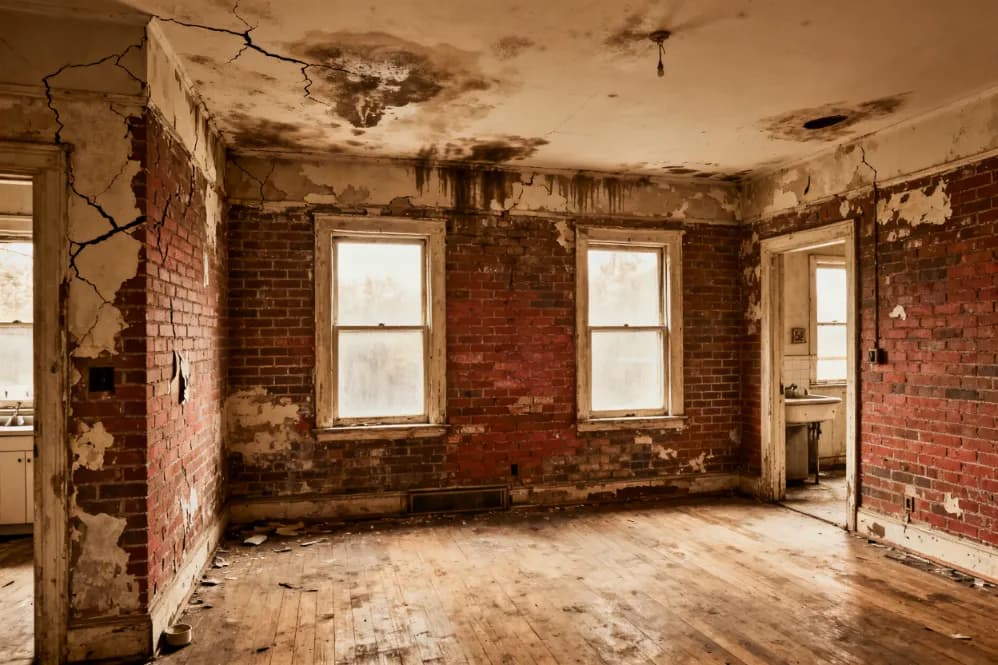
Ontario real estate runs largely on the principle of caveat emptor — "buyer beware." Broadly, that means the buyer is responsible for inspecting the property and satisfying themselves about patent defects: the problems a reasonable inspection would reveal, like a cracked window, a stained ceiling, or a sagging porch. With patent defects, an as-is sale mostly puts the onus on the buyer to look before they leap.
Latent defects are a different story. A latent defect is a hidden problem a buyer couldn't reasonably spot on a normal viewing — think a chronically leaking foundation behind fresh drywall, or a known structural issue that isn't visible. Ontario courts have generally held that a seller who knows about a latent defect making the home dangerous or unfit to live in — or who actively conceals a defect — can't simply hide behind an as-is clause. Material facts you're aware of shouldn't be papered over.
Because the line between patent and latent, and exactly what must be disclosed, turns on the specific facts, this is worth confirming with a real estate lawyer before you list or sign anything. Being upfront also protects you: honest disclosure reduces the chance of a buyer coming back after closing.
This isn't legal, financial, or tax advice — every situation turns on its own facts, so confirm the specifics with a real estate lawyer, accountant, or Licensed Insolvency Trustee before making an irreversible decision.
Who Sells As-Is in Ontario — and Why
People rarely sell as-is on a whim. Usually there's a reason repairs don't make sense. Common situations include:
- Inherited homes. An estate property is often dated, needs a full clean-out, and the heirs would rather not sink money into renovations. Selling an inherited property as-is lets the family close the estate and move on.
- Fire, water, or mould damage. When a home has taken real damage, the cost to restore it can outrun the seller's budget or timeline.
- Financial distress. Owners facing power of sale or foreclosure rarely have cash on hand for repairs and often need to sell quickly to get ahead of the mortgage.
- Tired landlords. A rental that's been hard on the owner — problem tenants, deferred maintenance, one repair after another — is frequently easier to sell as-is than to fix up between tenancies.
The common thread is the same in each case: the seller wants out without pouring more time and money into a property they're leaving behind.
As-Is vs. a Repaired Listing: The Trade-Offs
Selling as-is and fixing up first are two very different routes, and each has a cost.
Selling as-is:
- Pros: You spend nothing on repairs, staging, or renovations; the timeline is usually much faster; there are no open houses to prepare for.
- Cons: The headline price is typically lower than a fully renovated home would fetch, and on the open market an as-is home can sit longer because it appeals to a narrower pool of buyers.
Fixing up first, then listing:
- Pros: A move-in-ready home can command top dollar and draw more competing offers.
- Cons: Renovations cost money you may not have, take weeks or months, and there's no promise you'll recover what you spend. You also carry the property — taxes, insurance, utilities — the entire time it's being fixed and marketed.
For many Ontario sellers, the math tips toward as-is once you add up the repair bill, the carrying costs, and the plain value of simply being done.
How a Cash Buyer Makes a Clean As-Is Offer
Selling to a cash buyer is where an as-is sale becomes genuinely straightforward. When you sell to Sell Your Property in Ontario, the process is built around the property's current condition:
- We buy houses, condos, cottages, land, and rentals across Ontario in as-is shape — you don't fix a thing, and you can leave unwanted belongings behind.
- We arrange one scheduled walkthrough to see the property, then put together a fair, no-obligation cash offer, usually within 24 hours.
- There are no commissions or agent fees, and no staging or open houses to organize.
- Closing is flexible and fast — often in as little as 7 days, and typically 7 to 15 — or on a later date if you need more time to organize.
You can see the full picture on our how to sell your property page, and we work right across the province — from Toronto to cottage country and the small towns in between. Because we're the buyer, there's no waiting on someone else's financing to come together, which is what makes an as-is close so much simpler than a traditional listing.
Get a Fair Cash Offer for Your As-Is Home
If you've got a property you'd rather sell exactly as it stands, we can help. Sell Your Property in Ontario buys houses in any condition across the province, and we handle the paperwork so you can move on without the repairs, the showings schedule, or the guesswork.
📞 Call us at 647-495-4260 or reach out through our contact page for a free, no-obligation cash offer on your as-is home.