Yes—you can sell a house with foundation problems in Ontario, and you don't have to fix a single crack before you do it. Structural issues scare off most traditional buyers, but they don't make your property unsellable. The two realistic paths are to pay for the repairs and list on the open market, or to sell as-is to a cash buyer who prices the damage in and closes on your timeline.
At Sell Your Property in Ontario, we buy houses with cracked foundations, uneven settling, bowing walls, and water damage across the province—no repairs, no staging, and no financing conditions to fall through. Below, we'll walk through how to spot structural trouble, why these homes are so hard to list, the repair-versus-sell math, and how an as-is sale actually works.
Signs Your Ontario Home Has Foundation or Structural Trouble
Not every crack is a crisis. The trick is knowing which signs point to real movement in the structure versus normal cosmetic wear.
Cracks that keep coming back
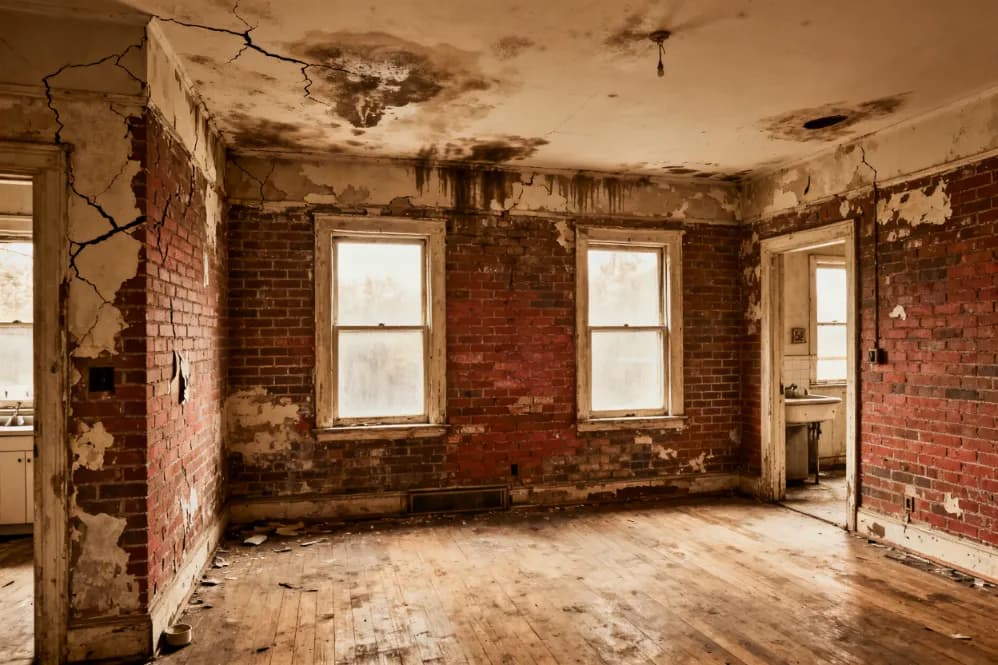
Hairline cracks in drywall are ordinary as a house settles. The ones that signal a structural problem are wider than a coin's edge, run diagonally from the corners of windows and doors, climb through brick or block in a stair-step pattern, or reopen every time you patch them. A horizontal crack across a basement wall is the most serious of all—it usually means soil pressure is pushing the wall inward.
Settling and sloping floors
If a marble rolls across your living-room floor on its own, or the floors dip toward the centre of the house, the foundation may be settling unevenly. Ontario's freeze-thaw cycles and clay-heavy soils are hard on footings, and older homes on rubble or fieldstone foundations are especially prone to movement.
Bowing or leaning walls
A basement wall that bulges inward, a chimney pulling away from the house, or a visible lean in an exterior wall all point to structural stress. These are the defects a buyer's inspector spots fastest.
Water intrusion and moisture
Chronic basement leaks, efflorescence (the chalky white staining on foundation walls), musty odours, or mould can both cause and reveal foundation damage. Water finds every crack, and standing water slowly weakens footings from below.
Sticking doors and windows
When the frame shifts, doors and windows stop closing cleanly, gaps open above them, or fresh cracks appear in the surrounding plaster. On their own these are minor—but alongside the signs above, they help confirm the house is on the move.
Why a House With Foundation Problems Is Hard to List
Traditional buyers want a home they can move into, not a renovation project with an open-ended budget. Structural issues throw up three specific roadblocks on the open market:
- Failed home inspections. Most Ontario purchase offers include a home-inspection condition. A structural red flag almost always sends the buyer back to renegotiate—or to walk away entirely.
- Financing that falls through. Lenders won't fund a mortgage on a home the appraiser considers structurally unsound. Even a keen buyer can lose their financing after the inspection, collapsing the deal weeks in.
- Repair costs no one wants to eat. Once a defect is on paper, buyers demand a steep price cut or a completed fix before closing. You either drop your price, pay for the repair yourself, or watch the listing sit while carrying costs pile up.
The result is a listing that draws lowball offers, drags on for months, and often falls apart after an accepted offer—each collapse resetting the clock. A traditional MLS listing also means repairs, staging, and open houses, none of which are appealing when the foundation itself is the problem.
Repair or Sell? Running the Numbers
Before you commit to a fix, get a written quote from a structural engineer or a foundation contractor—not just a ballpark over the phone. Ontario foundation work spans a huge range: minor crack injection is relatively cheap, while underpinning, replacing a wall, or lifting and re-levelling a house can run into the tens of thousands. And the first quote is rarely the final bill, because opening up a foundation tends to reveal more.
Then weigh the full cost of the repair-and-list route against a straight as-is sale:
- Repair cost plus the very real risk of overruns
- Carrying costs while the work happens and the home sits—mortgage, property taxes, insurance, and utilities
- Realtor commission (typically 4–5%, split between brokerages) and the closing costs on the sale
- The discount buyers still apply to a home with a documented repair history
You can estimate your seller-side numbers with our Ontario closing cost calculator. More often than not, once every line is added up, the money left after repairing and listing isn't much more than a clean as-is offer you could accept today—minus the months of stress, the financing risk, and the constant chance the deal falls apart at the last minute.
Your Options for Selling a Structurally Compromised Home
If you want to see the full process end to end, our guide on how to sell your property breaks down each step. When the house has a structural problem, though, most Ontario owners land on one of two choices:
- Repair first, then list. This can fetch the highest headline price, but it ties up cash in a foundation, stretches the timeline over months, and still carries the risk of a buyer's financing or inspection killing the deal.
- Sell as-is to a cash buyer. This is faster and more certain: no repairs, no commissions, and no appraisal to fail. You trade a slice of top-dollar potential for speed and peace of mind.
For an owner who doesn't want to gamble on repairs or wait out a fragile listing, the as-is route is usually the least stressful path forward.
How a Cash Buyer Purchases the Home As-Is
We buy the property exactly as it stands. Here's how the process works:
- Tell us about the house. You don't need engineering reports or a spotless basement—just the basics.
- We review it and book one scheduled walkthrough so we can see the condition for ourselves.
- You get a fair, no-obligation cash offer, often within 24 hours, that already factors in the structural work we'll take on.
- If you accept, we close on your date—in as little as 7 days, and typically within 7 to 15.
Because we pay cash, there's no mortgage appraisal to fail and no financing condition to collapse. There are no realtor commissions, no repair credits to haggle over, and no open houses. You can even leave behind anything you don't want to move. We buy houses with foundation and structural problems in Toronto, Hamilton, and communities right across the province.
This isn't legal, financial, or tax advice—every situation turns on its own facts, so confirm the specifics with a real estate lawyer, a structural engineer, or an accountant before making an irreversible decision.
Get a Fair Cash Offer for Your Ontario Home
You don't have to pour money into a foundation to move on from it. Whether your home has a cracked basement wall, sloping floors, or years of water damage, Sell Your Property in Ontario will buy it as-is, anywhere in the province—simply, transparently, and fast.
📞 Contact us today at 647-495-4260 for a free, no-obligation cash offer on your home.